
AI Trip Planner vs Traditional Travel Planning (2026 Guide)
Planning a trip in 2026? Compare AI trip planners vs traditional travel planning and discover which method actually saves time and stress.
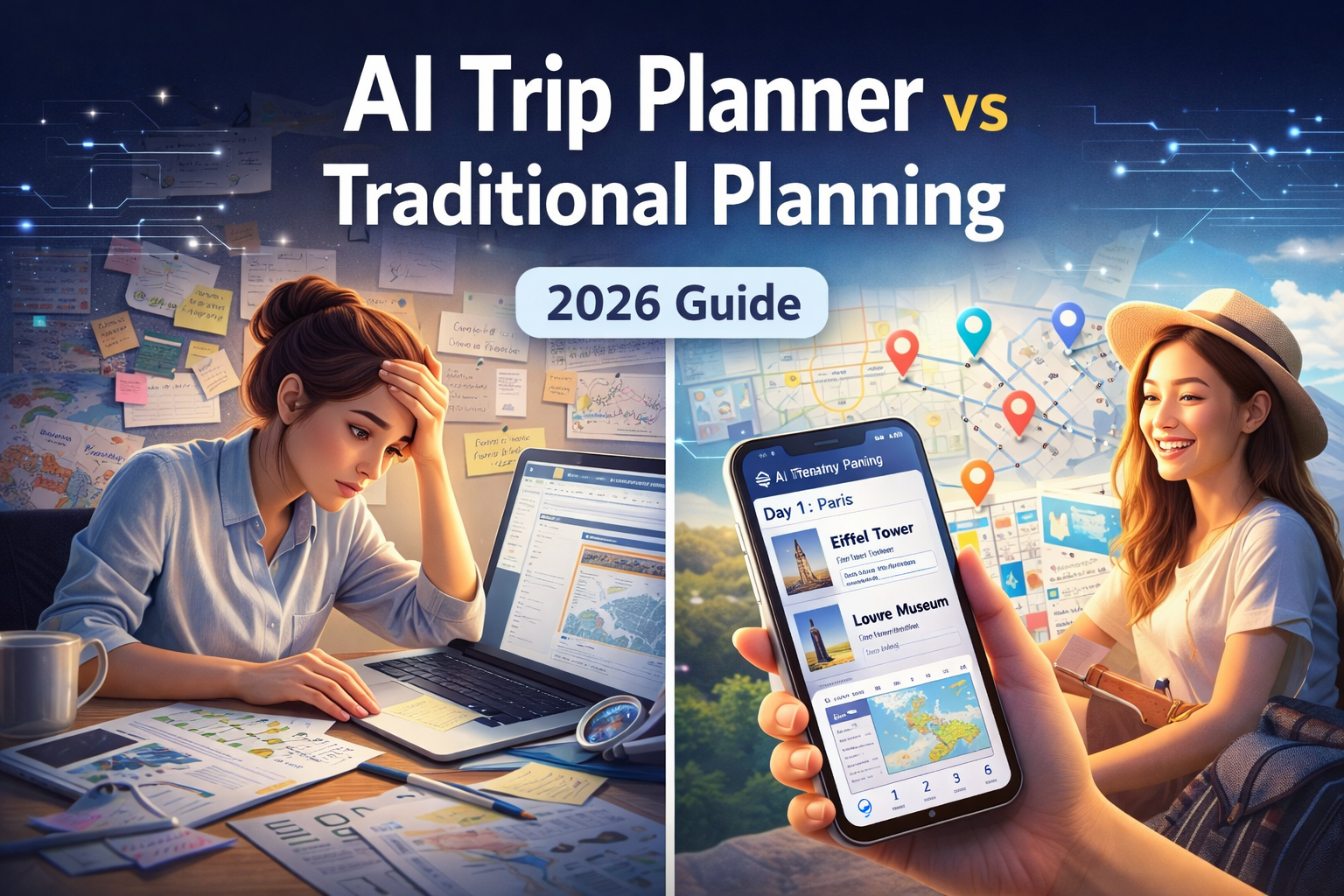
Travel planning has changed more in the last five years than in the previous twenty.
What once meant spreadsheets, bookmarks, and endless blog-hopping is now being replaced by AI systems that can design a complete trip in minutes.
So in 2026, what actually works better: AI trip planners or traditional travel planning?
This guide breaks it down honestly—no hype, no fluff—so you can decide what makes sense for your travel style.
What Is Traditional Travel Planning?
Traditional travel planning usually looks like this:
- Reading multiple travel blogs
- Watching YouTube itinerary videos
- Saving places on Google Maps
- Manually estimating travel time
- Creating a rough day-by-day plan
This method gives you control, but it comes with real downsides—especially for longer or unfamiliar trips.
Where Traditional Planning Fails
- Time-consuming – Planning a 5–7 day trip can take hours or days
- Unrealistic schedules – Blogs often underestimate travel time
- Overpacked days – Too many activities, too little rest
- No personalization – Most itineraries are written for everyone, not you
Traditional planning still works—but it’s inefficient in 2026.
What Is an AI Trip Planner?
An AI trip planner uses algorithms to automatically create a travel itinerary based on:
- Destination
- Trip duration
- Interests
- Travel pace
Instead of manually assembling a plan, the system does the heavy lifting for you.
Modern tools like SearchSpot.ai generate complete, editable itineraries in seconds—without the chaos of manual planning.
AI Trip Planner vs Traditional Travel Planning
Let’s compare both approaches where it actually matters.
| Factor | Traditional Planning | AI Trip Planner |
|---|---|---|
| Planning time | Hours or days | Minutes |
| Personalization | Manual, limited | Automatic |
| Route optimization | Guesswork | AI-based |
| Flexibility | Low | High |
| Stress level | High | Low |
The difference isn’t subtle—it’s structural.
Why AI Trip Planning Wins in 2026
Travel in 2026 is faster, more dynamic, and less predictable.
Flights get delayed. Places close. Energy levels change.
AI planners handle this better because they:
- Build realistic daily schedules
- Balance sightseeing and rest
- Allow instant regeneration of plans
That’s why most travelers searching for the best itinerary planner 2026 are now considering AI-first tools.
For a deeper breakdown, see this complete guide on the best itinerary planner 2026.
Where Traditional Planning Still Makes Sense
AI isn’t magic—and traditional planning isn’t dead.
Traditional planning can still work if:
- You enjoy researching travel deeply
- You have plenty of time
- You’re revisiting a familiar destination
But for most people, this level of effort simply isn’t worth it anymore.
Why Travelers Choose SearchSpot.ai
Travelers switch to SearchSpot.ai because it:
- Creates realistic, human-friendly itineraries
- Adapts plans instantly
- Removes decision fatigue
- Keeps full control in the user’s hands
You’re not giving up control—you’re outsourcing the boring parts.
Final Verdict: AI or Traditional?
In 2026, traditional travel planning still works—but AI trip planning works better.
If you want speed, clarity, and personalization without sacrificing flexibility, AI planners are the clear upgrade.
Tools like SearchSpot.ai represent where travel planning is heading next.
Bottom line:
If you’re still planning trips the same way you did years ago, you’re doing extra work for worse results.
AI trip planning isn’t the future anymore—it’s the default.