
Best AI Trip Planner for Europe Trips in 2026
Planning a Europe trip can quickly become overwhelming. AI trip planners now help travelers generate personalized itineraries, discover hidden spots, and organize multi-city trips in seconds. Here are the best AI trip planners for Europe trips in 2026.

Planning a Europe trip sounds exciting… until you actually start planning it.
You open Google and suddenly you’re juggling 10 cities, 50 attractions, train routes, flights, restaurants, museums, and day trips. Every blog suggests different places. Every map looks overwhelming. And after a few hours, instead of feeling excited, you feel stuck.
Should you go from Paris to Amsterdam first or Rome to Florence?
Is it realistic to visit three cities in four days?
Which places are actually worth your time?
This is exactly where AI trip planners are starting to change how people travel.
Instead of reading dozens of travel blogs and manually building itineraries, travelers can now use AI tools that generate personalized travel plans in seconds.
In 2026, AI is quietly becoming the default way people plan Europe trips.
Let’s look at the best AI trip planners for Europe trips in 2026, what they do well, and where they still fall short.
Why AI Trip Planners Are Becoming Popular for Europe Travel
Europe is one of the most complicated places to plan a trip.
Not because it lacks information — but because there’s too much of it.
A typical Europe trip involves:
- Multiple countries
- Different transport systems
- Train schedules
- Popular attractions
- Hidden local spots
- Day trips from major cities
Traditional travel planning usually looks like this:
- Read blogs
- Save locations on Google Maps
- Compare train routes
- Create a rough itinerary
- Realize it's unrealistic
- Start over again
AI travel planners simplify this process by combining everything into one system.
You tell the AI things like:
- “Plan a 10-day Europe trip”
- “I like quiet cafes and walking cities”
- “Avoid tourist crowds”
The AI then generates a custom travel plan based on your preferences.
This is why tools like AI Europe itinerary planners are becoming popular among travelers who want faster, smarter trip planning.
Top AI Trip Planners for Europe Trips in 2026
Several AI travel tools have emerged in the last few years. Some focus on itinerary creation, others focus on travel discovery.
Here are some of the best AI trip planners for Europe travel right now.

SearchSpot takes a slightly different approach compared to most AI travel planners.
Instead of simply generating a rigid itinerary, it focuses on travel discovery and realistic recommendations. Travelers can describe what they’re looking for — whether it’s a quiet park, a good running route, a sunset viewpoint, or a hidden cafe — and the AI suggests places that match those preferences.
This makes it particularly useful while actually being in a city, not just planning months in advance.
Strengths
- Personalized travel discovery
- Context-based recommendations
- Useful for exploring cities in real time
Weakness
Since it focuses more on discovery, travelers who want extremely structured itineraries may still use additional planning tools.

Mindtrip is one of the most advanced AI travel planners available today.
Instead of just generating an itinerary, it lets you explore destinations through an interactive interface.
You can:
- Generate travel plans
- Explore attractions on maps
- Adjust plans dynamically
Strengths
- Interactive planning
- Strong visual interface
- Good for exploring cities
Weakness
It still focuses mostly on structured itineraries, which can sometimes feel rigid.

Roam Around is one of the fastest AI trip planners on the internet.
You simply enter your destination and travel dates, and the AI generates a complete travel itinerary within seconds.
Strengths
- Extremely fast itinerary creation
- Easy to use
- Great for quick planning
Weakness
The itineraries can feel too generic and sometimes unrealistic.
4. GuideGeek
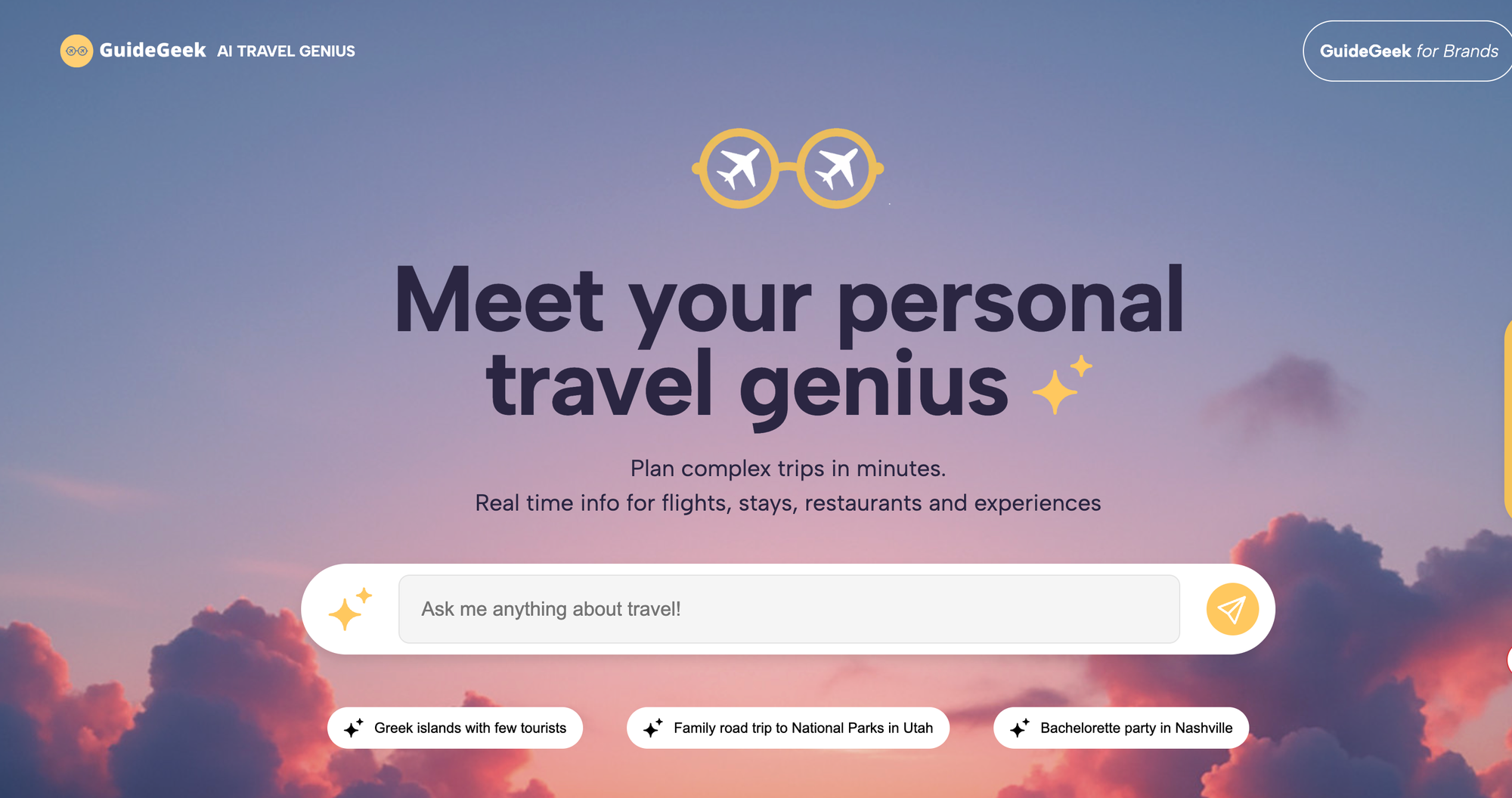
GuideGeek works like a travel assistant you can chat with.
Instead of filling forms, you just message the AI and ask questions like:
- “What should I do in Barcelona for two days?”
- “Best cafes in Rome?”
The AI responds instantly with travel suggestions.
Strengths
- Conversational interface
- Helpful travel recommendations
- Good discovery suggestions
Weakness
It’s better for recommendations than full trip planning.
5. Layla AI
Layla is another conversational AI travel planner that focuses on personalized recommendations.
It helps travelers find:
- Hotels
- Flights
- Experiences
- Itineraries
Strengths
- Personalization
- Strong conversational interface
- Helpful discovery tools
Weakness
Some suggestions still feel like standard tourist recommendations.
6. Trip Planner AI
Trip Planner AI focuses on building structured travel plans.
You can input destinations, travel dates, and preferences, and it generates a complete itinerary.
Strengths
- Good route planning
- Easy city-to-city travel planning
- Useful for multi-city trips
Weakness
Sometimes prioritizes logistics over discovery.
What Makes a Good AI Trip Planner for Europe?
Europe travel planning isn’t just about listing attractions.
A good AI Europe itinerary planner needs to understand several important factors.
Realistic travel schedules
Many tools underestimate travel time between places.
Walking across Paris, waiting in museum lines, or taking trains between cities all take time.
A good planner understands realistic pacing.
City clustering
Europe trips usually involve visiting multiple cities.
A good AI planner should help travelers organize routes like:
- Paris → Amsterdam → Berlin
- Rome → Florence → Venice
This reduces unnecessary travel.
Contextual recommendations
The best travel moments often come from unexpected discoveries.
Maybe a quiet cafe by a canal.
Maybe a hidden park locals love.
A strong AI planner should help travelers discover contextual places, not just famous landmarks.
The Problem With Most AI Itineraries
Here’s the uncomfortable truth about many AI travel planners.
They generate beautiful itineraries.
But those itineraries are often impossible to follow.
You’ll see plans like:
- 8 attractions in one day
- Museums across opposite sides of the city
- No time for walking, food, or exploration
In reality, travel doesn’t work like that.
People get tired.
They discover unexpected places.
They spend more time in locations they love.
A rigid itinerary can sometimes make travel feel like a checklist instead of an experience.
A Better Way to Discover Places While Traveling
Travel planning is slowly shifting from strict itineraries to flexible discovery.
Instead of asking:
“Give me a perfect 7-day schedule.”
Travelers are starting to ask:
- What should I explore near me right now?
- Where can I find a quiet place to walk?
- Which cafe is perfect for a rainy afternoon?
The future of travel planning may look less like a fixed schedule and more like dynamic recommendations based on context.
Imagine opening an AI travel app in Rome and seeing suggestions like:
- Best sunset viewpoints nearby
- Quiet cafes within walking distance
- Hidden neighborhoods locals love
This kind of contextual travel discovery is where AI travel tools are heading next.
The Future of AI-Powered Travel Planning
AI travel planning is still in its early stages.
Most tools today focus on building itineraries.
But the real opportunity lies in helping travelers discover places in the moment, not just plan them months in advance.
The best AI trip planner for Europe won’t just generate schedules.
It will help travelers:
- Explore cities naturally
- Discover hidden spots
- Make better travel decisions in real time
Because the best travel experiences rarely come from perfect itineraries.
They come from unexpected discoveries.
And AI is starting to make those discoveries easier than ever.