
Best AI Trip Planner for Stress-Free Vacations in 2026
Planning a trip shouldn’t take hours of research. Discover the best AI trip planners in 2026 that help travelers create smart itineraries and plan stress-free vacations.

Planning a vacation sounds exciting—until you actually start doing it.
You open Google, check blogs, compare hotels, watch YouTube videos, scroll through maps, and suddenly you have 30 tabs open and still no clear plan. This is exactly why AI trip planners are becoming popular in 2026.
Instead of spending hours researching destinations, attractions, and routes, travelers can now simply describe the trip they want, and an AI tool generates a complete itinerary in seconds.
In this guide, we’ll explore some of the best AI trip planners available today and how they are changing the way people plan vacations.
Why AI Trip Planners Are Becoming Popular
Travel planning is one of the most time-consuming parts of any trip. Even experienced travelers often struggle to organize everything efficiently.
AI travel planners simplify this process by:
- Generating personalized itineraries
- Suggesting attractions and experiences
- Optimizing travel routes
- Recommending restaurants and local spots
- Adjusting plans based on preferences
Instead of manually researching everything, travelers can rely on AI to organize the trip intelligently.
Best AI Trip Planners in 2026
Here are some of the most popular AI travel planning tools used by travelers today.
1. Wonderplan
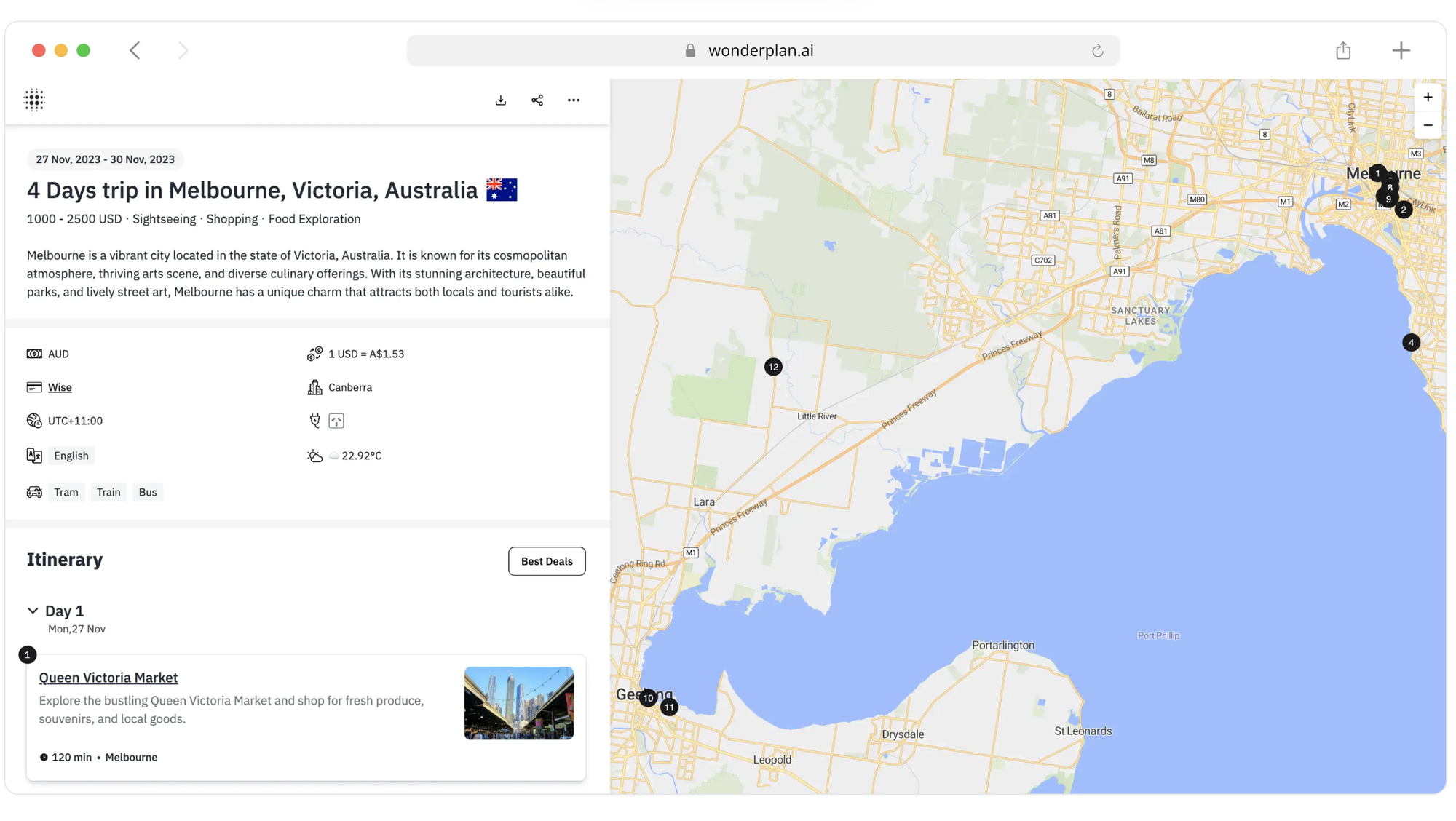
Wonderplan is one of the most widely known AI trip planning tools. It asks users a few questions about their travel preferences and then generates a customized travel itinerary.
Travelers can enter details such as:
- Budget
- Trip duration
- Interests like beaches, nightlife, nature, or food
The platform then creates a day-by-day travel plan that users can modify easily.
Wonderplan works well for travelers who want a quick structured itinerary without spending hours planning.
2. Mindtrip
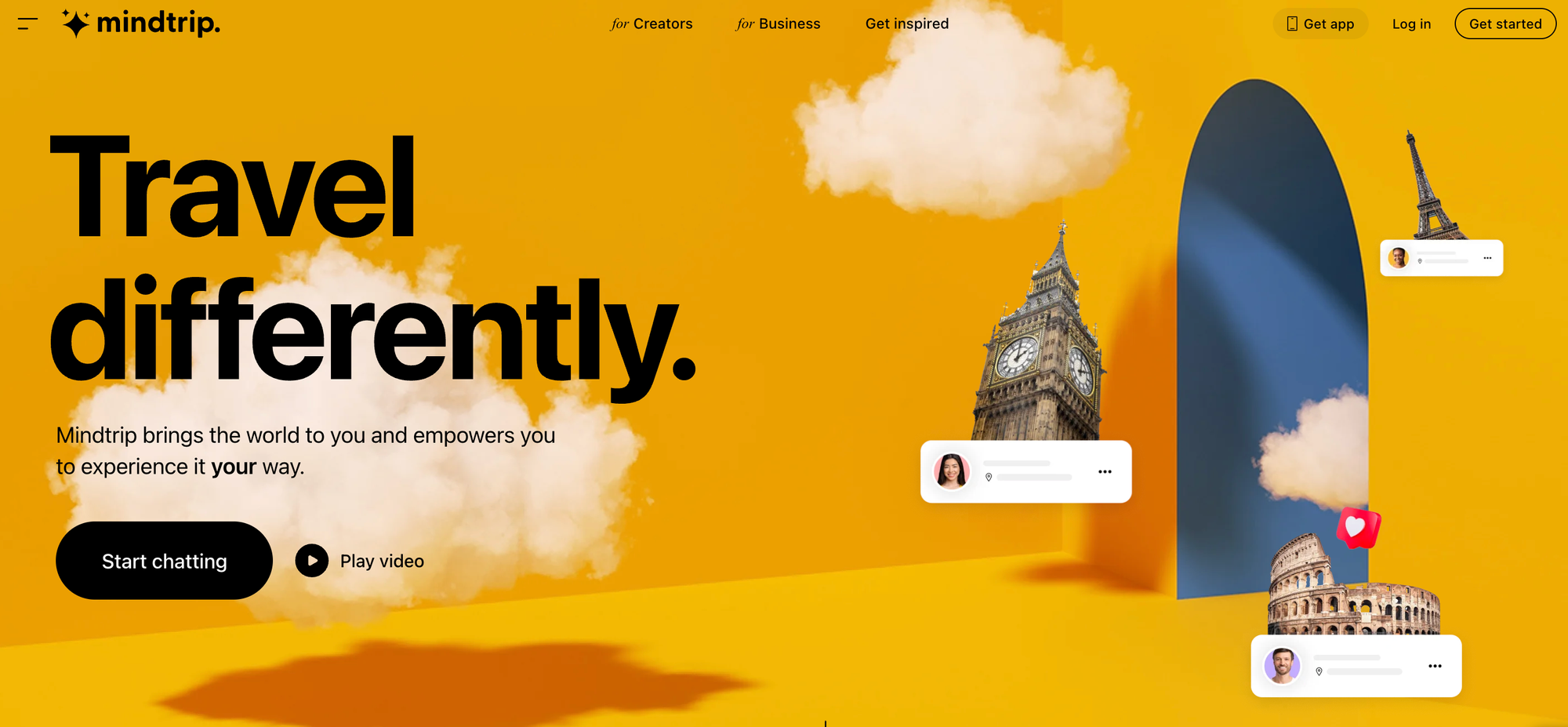
Mindtrip focuses on interactive travel planning. Instead of generating a fixed itinerary, the platform allows users to refine and adjust their trip plan through conversation with the AI.
The system suggests:
- Attractions
- Restaurants
- Experiences
- Activities
This makes the planning process feel more like talking to a travel assistant rather than using a traditional planning tool.
3. Layla AI
Layla AI works like a virtual travel agent powered by artificial intelligence.
Users can simply type queries such as:
- “Plan a 7-day trip to Bali”
- “Find hidden cafes in Paris”
- “Suggest things to do in Tokyo at night”
Layla then generates recommendations for destinations, accommodations, and activities.
It’s especially useful for travelers looking for inspiration and travel ideas.
4. iPlan.ai

iPlan.ai is designed for quick itinerary generation.
After entering basic travel information like destination and trip length, the AI automatically builds a travel plan including attractions, restaurants, and routes.
The platform also allows travelers to edit schedules, add places, and share itineraries with friends, making it useful for group trips.
The Problem with Most AI Trip Planners
While AI trip planners are impressive, many travelers notice a common issue.
Most platforms generate beautiful itineraries that look great but are not always practical.
Some typical problems include:
- Too many places scheduled in one day
- Attractions that are far apart
- Plans that don’t match real travel pace
- Lack of confidence in the recommendations
In other words, the itinerary may look good on screen but feels difficult to actually follow during the trip.
This is where newer AI travel tools are trying to improve the experience.
SearchSpot: A Different Approach to AI Trip Planning
While many platforms focus mainly on building detailed itineraries, SearchSpot approaches travel planning differently.
Instead of just generating a fixed schedule, SearchSpot focuses on helping travelers discover the best places around them based on real preferences.
For example, a traveler might ask:
- “Where can I go for a quiet morning walk?”
- “Best places to run near the beach.”
- “Good cafes to work from in Bali.”
SearchSpot adapts recommendations based on what the traveler actually wants to do at that moment.
Rather than creating rigid itineraries that may be difficult to follow, the platform helps travelers make confident decisions throughout their trip.
This makes it feel less like a planning tool and more like a travel companion that helps you explore smarter.
The Future of AI Travel Planning
AI is rapidly changing how people travel.
In the near future, AI travel assistants may handle almost everything:
- Building personalized itineraries
- Recommending hidden local spots
- Adjusting plans in real time
- Managing bookings and reservations
- Providing on-trip recommendations
Instead of spending hours researching destinations, travelers will simply describe their ideal trip and let AI handle the complexity behind the scenes.
Final Thoughts
AI trip planners are making travel planning faster, smarter, and far less stressful.
Platforms like Wonderplan, Mindtrip, Layla AI, and iPlan.ai have already made trip planning easier by generating itineraries automatically.
At the same time, newer platforms like SearchSpot are focusing on solving a deeper problem—helping travelers feel confident about where to go and what to do during their trip.
As AI technology continues to evolve, one thing is clear:
The future of travel planning will be powered by AI.