
Digital Nomad Bali: Canggu, Ubud, or Sanur? The Honest 2026 Base Guide
Is Bali still worth it for digital nomads in 2026? This guide breaks down Canggu, Ubud, and Sanur, plus costs, visas, and real tradeoffs—so you choose the right base, not just the most popular one.

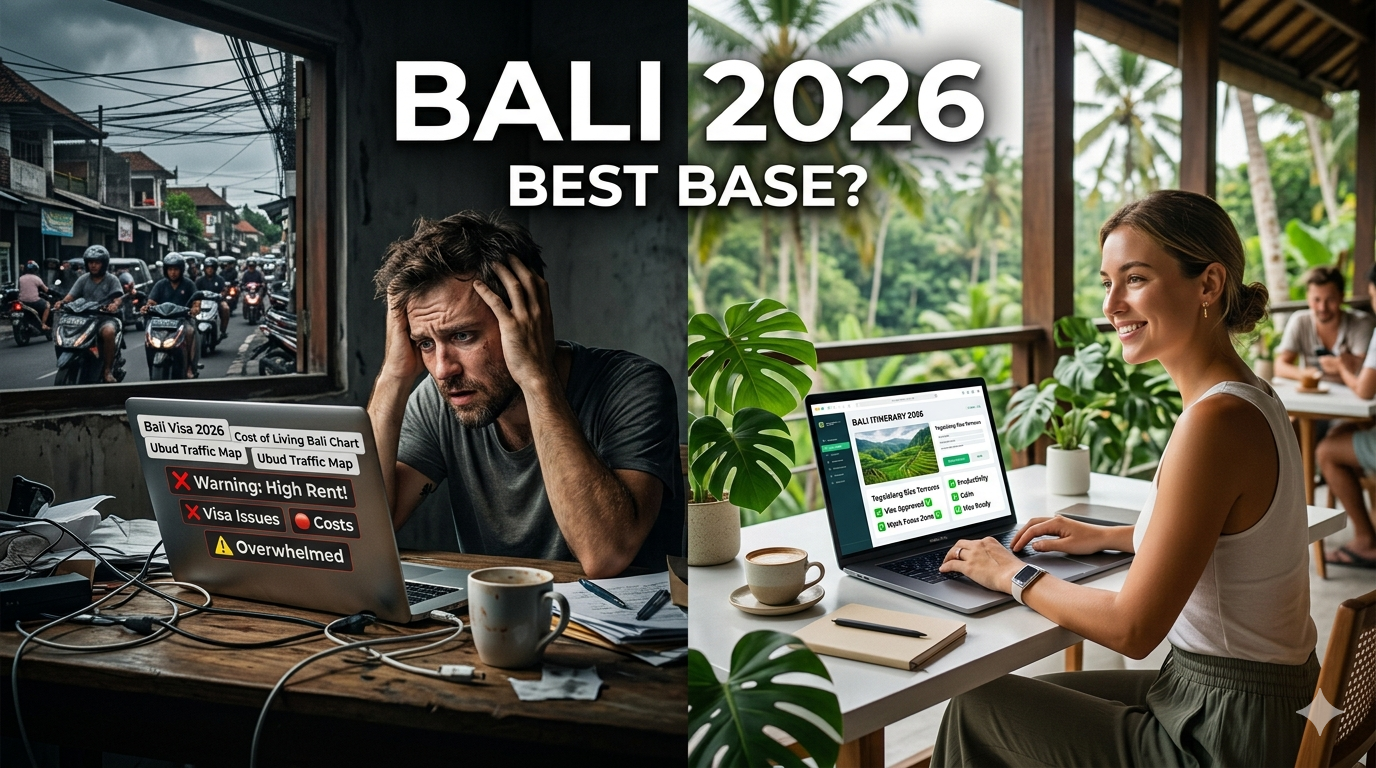
You are probably not asking whether Bali is beautiful. You are asking whether it is still practical. That is the real digital nomad Bali question in 2026.
Because Bali is still one of the easiest places in the world to romanticize and one of the easiest places to misplay. The internet is good where nomads actually live. The community is real. The workday can feel lighter here than almost anywhere else. But the island also punishes vague planning. Pick the wrong base and your days turn into scooter traffic, overpriced coffee, and shallow networking. Get lazy about visa reality and you start building your life on legal grey space.
So here is the clean answer first: if you want the biggest built-in nomad scene, choose Canggu. If you want focus and a calmer nervous system, choose Ubud. If you want a more livable long-stay rhythm, choose Sanur. If you are thinking of Bali as a 6 to 12 month serious base, sort your visa path before you book the villa.
Digital nomad Bali, the fast answer
| If you care most about | Choose | Why |
|---|---|---|
| Meeting people fast | Canggu | The densest mix of coworking, cafes, events, and other remote workers |
| Deep work and wellness | Ubud | Less beach hype, more focus, better if you want calm over social velocity |
| A sustainable daily routine | Sanur | Less chaotic than Canggu, easier for longer stays and steadier habits |
| Surf plus scene | Canggu or Uluwatu | Canggu wins on convenience, Uluwatu wins on scenery but loses on work infrastructure |
| Legal clarity | Remote Worker KITAS over endless visit-visa improvisation | Bali is fun when your paperwork is boring |
The first decision: stop treating Bali like one place
This is where most first-timers waste a week. They search digital nomad Bali, read three generic guides, hear that Bali is great for remote work, then book the first polished room they see in Canggu. Only after arrival do they realize Bali is not a single base. It is a set of tradeoffs.
Canggu is the high-energy version of Bali. It gives you cafés, coworking, content-creator gravity, startup chatter, gym culture, and a very easy social life. It also gives you more distraction, more traffic, and more pressure to confuse motion with progress.
Ubud is the opposite correction. Better if you actually want to write, build, reset, or work without feeling like every coffee run is a networking event. You lose the coast. You gain more quiet.
Sanur is the underrated compromise. It does not try to be the coolest place on the island. That is exactly why it works for a lot of adults who need stable days more than scene points.
My opinionated recommendation: pick Bali based on the version of yourself you need for the next 90 days, not the version you want to post.
Where to stay in Bali as a digital nomad
Canggu: best for instant momentum
If you are new to Bali, Canggu is the easiest soft landing. The digital nomad ecosystem is already there. You do not need to assemble it yourself. You can work from a café in the morning, test a coworking pass in the afternoon, and meet people without trying very hard.
The downside is obvious within a few days. Canggu can eat attention. Traffic is annoying. Rent pressure is real. The social layer is strong, but not always useful. It is a great place to arrive. It is not automatically the best place to stay.
Choose Canggu if you want access, convenience, and community density. Leave if you start feeling scattered.
Ubud: best for people who actually need to think
Ubud wins when your work needs focus. It is better for founders, writers, freelancers with client calls, and anyone who knows they do better with structure than stimulation. You still have coworking and plenty of nomad services, but the whole environment is less noisy.
The tradeoff is simple: no beach, less surf culture, fewer easy-night-out options. For some people that is a bug. For others it is the whole point.
Sanur: best for long-stay adults
Sanur is where Bali starts making more sense as life instead of a phase. It is calmer, easier to move through, and more compatible with routines that last longer than a month. If you are doing serious remote work, want decent food, and do not need every third person around you to be a coach or creator, Sanur deserves more respect than it gets.
If I were choosing a base for six steady months instead of a social first month, I would look at Sanur harder than most Bali guides tell you to.
The visa reality you cannot ignore
This is the part where most Bali content gets soft. Bali is still incredibly attractive for remote workers, but the legal setup matters.
Indonesia’s immigration system currently gives you two very different lanes. The common nomad move is the C1 visit visa route: 60 days initially, extendable online up to 180 days. People use it all the time. It is workable for shorter stays. It is not the same thing as a purpose-built digital nomad visa with clean legal certainty.
The clearer path for employees working remotely for a company abroad is the Remote Worker KITAS, listed by Indonesian immigration as visa index E33G. That route gives a one-year stay and is much closer to how serious long-stay remote workers actually want to operate.
That is why my recommendation is blunt:
- If you are testing Bali for one to three months, the visit-visa route can be enough.
- If you are planning to build a real base, stop acting like perpetual extensions are a strategy. Treat visa clarity as part of the cost of living.
Also, do not get cute with local work. Bali.com is explicit that getting paid in Indonesia or working for Indonesian clients without the proper permit is not allowed. That includes the casual gigs people pretend do not count.
What Bali really costs
Bali is still affordable compared with most Western nomad hubs, but the lazy old numbers floating around online are misleading. If you live very simply, Bali.com’s current estimate for a tight solo budget is roughly USD 600 to 900 per month, with a basic guesthouse room around USD 250 to 400. That is the survival version, not the comfortable creator-villa fantasy version.
If you want AC that works well, a good desk setup, a nicer neighborhood, better food habits, coworking, and the occasional social life, your real number moves up quickly.
The mistake is not spending more. The mistake is pretending your lifestyle goal is “cheap Bali” when what you actually want is “comfortable Bali with low friction.” Budget for the second one.
The practical friction people forget
Two non-glamorous details matter more than Instagram makes them look.
First, Nyepi. Bali shuts down completely for the Day of Silence, and in 2026 it falls on March 19. Flights pause, movement stops, and the island goes quiet. It is culturally important and logistically real. If you arrive at the wrong time without knowing this, you will feel blindsided.
Second, scooters. If you are going to ride, Bali.com says an international driving permit is now mandatory alongside your national license. You do not want your daily mobility plan resting on vibes and borrowed helmets.
So, is Bali still worth it for digital nomads?
Yes, but only if you stop asking the lazy version of the question.
The lazy version is: is Bali still good for digital nomads?
The better version is: which Bali base fits the way I work, how long am I actually staying, and am I willing to pay for a version of Bali that feels stable instead of just exciting?
That answer is clearer:
- Canggu if you need people, options, and speed.
- Ubud if you need thought, wellness, and less noise.
- Sanur if you need your life to feel normal enough to last.
Still cross-referencing 20 tabs for your Bali decision?
SearchSpot cross-analyzes neighborhoods, costs, visa options, and workday tradeoffs so you land on one clear answer instead of a browser graveyard.
Search Bali on SearchSpot
My final call
If this is your first Bali chapter, start in Canggu only if you promise yourself it is a launchpad, not a default. If you already know you work better with calm, skip the performance and go to Ubud. If you are older, more structured, or trying to make Bali livable instead of thrilling, Sanur is probably the smarter choice.
Bali still works. You just need to choose the version that works for you.

Need a faster answer than another week of Bali forums?
Use SearchSpot to compare Bali neighborhoods, stay tradeoffs, and remote-work fit in one place.
Search Bali neighborhoods on SearchSpot