
Frank Lloyd Wright Houses: Which Ones You Can Actually Visit, and the Route Clusters Worth Building a Trip Around
A practical Frank Lloyd Wright houses guide that helps travelers choose the right cluster, protect the strongest tours, and skip weak detours.

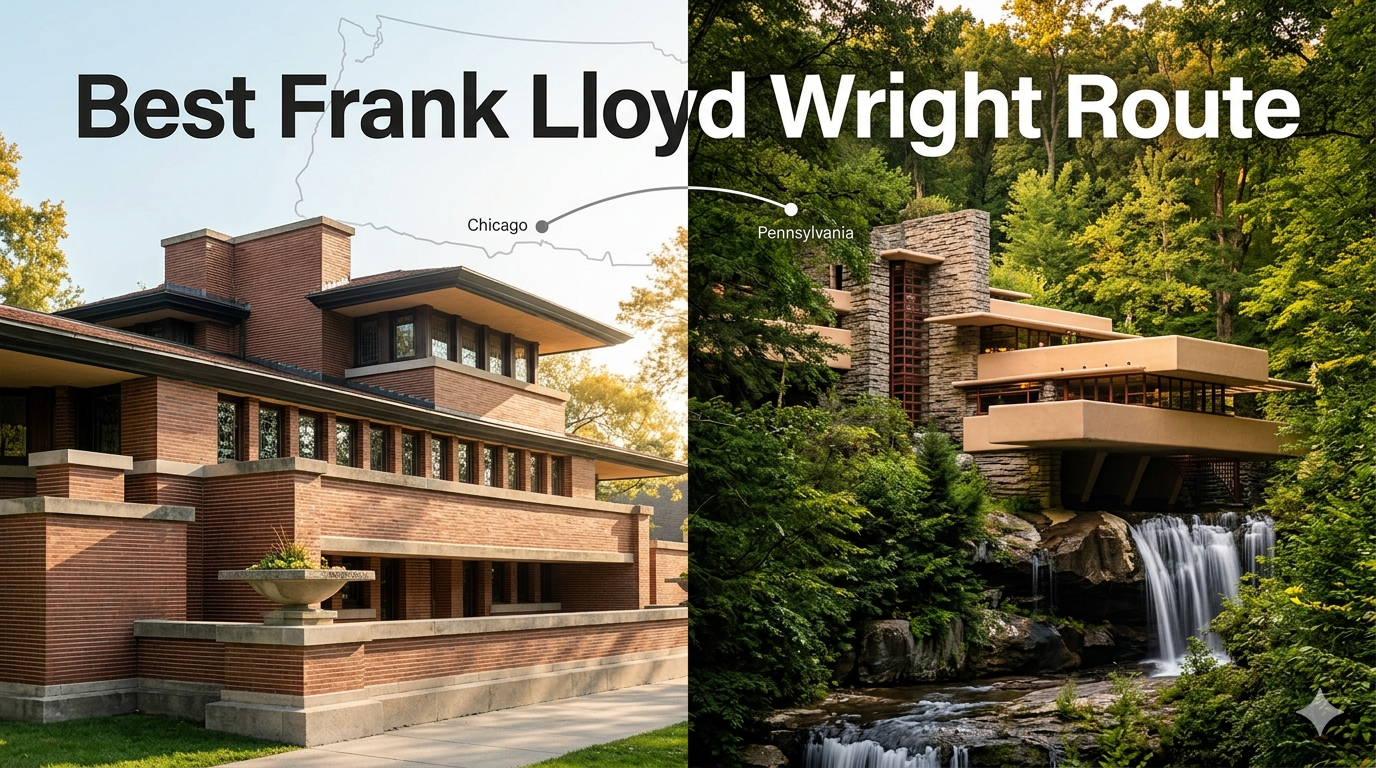
Frank Lloyd Wright houses can look deceptively easy to plan. The names are famous, the map seems broad but manageable, and the internet is full of ranked lists. Then you try to build a real trip and discover the problem: the most famous houses are scattered across the country, access rules vary, and some places are great architecture stops but weak trip anchors on their own. If you want a Frank Lloyd Wright trip that feels smart rather than random, you need route clusters, not a bucket list.
Here is the practical answer first: Chicago and Oak Park are the best first Wright base, Buffalo is a strong specialist add-on, Fallingwater works best as a deliberate detour rather than a casual pairing, and you should only chase isolated single-house stops if they fit a wider route you already wanted.
Why most Frank Lloyd Wright trip planning goes wrong
The usual advice sorts houses by fame. That is not enough. A travel plan needs density, visitability, and route logic. Some Wright sites are essential because they sit inside a cluster of related buildings, tours, archives, or walkable context. Others are extraordinary but geographically expensive. Without that distinction, travelers end up with a heroic list and a weak itinerary.
The second planning mistake is assuming every important Wright site is equally visitable. In practice, access ranges from robust public tours to limited-entry conditions to exterior-only appreciation. That means your route should be built around places with reliable public payoff, not around theoretical completeness.
The best first Frank Lloyd Wright route cluster: Chicago and Oak Park
If this is your first Wright-focused trip, start here. No other U.S. cluster gives you the same combination of access, concentration, and interpretive payoff. You are not just seeing one house. You are seeing a whole developmental landscape, where Wright’s domestic ideas, urban context, and preservation story become easier to read.
Why Chicago and Oak Park win
- You get multiple public-facing Wright sites in one metro area.
- You can combine house visits with neighborhood reading.
- The trip works well even if one ticketed stop shifts.
- It is the strongest balance between architectural significance and real-life efficiency.
This is what makes Chicago and Oak Park better than a fame-only route. The cluster is resilient. It still works as a trip if one building is sold out or one day changes shape.
How many days you need
For a first Wright trip, give Chicago and Oak Park two to three days. One day is enough to get a taste. Two days creates a real route. Three days lets you add more context without rushing.
| Cluster | Best for | Ideal stay length | Why it works |
|---|---|---|---|
| Chicago + Oak Park | First-time Wright travelers | 2 to 3 days | Best density, access, and context |
| Buffalo | Travelers who want Martin House depth | 1 to 2 days | Strong single-anchor payoff |
| Pittsburgh region | Travelers building around Fallingwater | 1 to 2 days | Iconic but more isolated |
| Scattered single-house detours | Completionists or route-specific travelers | Variable | Can be rewarding, but often weak as standalone trip logic |
Which Frank Lloyd Wright houses are actually worth building a trip around
Robie House
Worth prioritizing because it gives you one of the clearest readings of Wright’s Prairie ideas in a major-city context. It is also easier to justify in a real itinerary because it fits inside a broader Chicago route rather than demanding a whole trip by itself.
Home and Studio in Oak Park
This is one of the best interpretive anchors for a first Wright trip because it helps you understand the early arc, not just the mature icons. As part of an Oak Park day, it deepens the whole route.
Unity Temple
Not a house, but too important to ignore if you are already in the Oak Park cluster. It broadens the reading from domestic architecture into sacred and civic form.
Martin House
Buffalo’s strongest Wright reason. If you want a second cluster after Chicago, this is one of the best candidates. It is powerful enough to justify focused travel, especially for readers who care about estate scale and a more immersive campus-like experience.
Fallingwater
Essential in the broader Wright story, but often misused in planning. It is not the cleanest first-cluster anchor unless you are deliberately building around southwestern Pennsylvania. Treat it as a committed detour, not as something you casually add to a larger Midwest route.
Plan your architecture trip with better route logic
SearchSpot compares routes, neighborhoods, and site logistics so your architecture trip feels coherent before you step outside.
Plan your Frank Lloyd Wright trip on SearchSpot
Which sites are best from outside, and which deserve a ticket
One of the most useful distinctions in Wright travel is this: some sites justify interior planning, others mainly reward contextual exterior viewing. That is not a downgrade. It is how you keep the trip honest.
For a first route, protect tickets for the highest-value public sites in your chosen cluster. Then use exterior-only stops to give the day more texture without turning access uncertainty into a planning risk.
- Prioritize ticketed public houses that deepen the cluster.
- Use exterior-only homes as supporting context, not as the trip’s main promise.
- Do not build flights and hotel changes around a site unless the visitability is strong enough to justify it.
How to choose between Chicago, Buffalo, and Fallingwater
Choose Chicago and Oak Park if this is your first Wright trip
This is the correct choice for most travelers because it gives the strongest total package. You get multiple sites, reliable city infrastructure, and a route that still feels rewarding even if you edit down.
Choose Buffalo if you want one powerful anchor with less city sprawl
Buffalo works well for travelers who already know they care about Martin House specifically and want a more concentrated specialist trip. It is not the first cluster for everyone, but it is one of the best second moves.
Choose Fallingwater if the house itself is the whole point
If Fallingwater is the dream, then build around it properly. Just do not pretend it offers the same cluster logic as Chicago. The route calculus is different. The reward can still be huge, but the structure should be deliberate.
What to book early
For Wright travel, assume the strongest public interiors deserve advance planning, especially in peak travel periods and weekends. Historic-house tours are not casual walk-up inventory in the way large museums sometimes are. If a specific house is central to the trip, book it early and build your travel dates around confirmed access.
That applies especially to sites where timed tours or limited daily capacity shape the whole day. The closer a property is to your trip’s core promise, the less you should rely on spontaneity.
How many Wright sites are enough for a first trip?
For a first Wright-focused trip, three to five strong public sites inside one cluster are enough. More than that can dilute the reading instead of deepening it. The goal is not numerical coverage. The goal is understanding the architectural story through contrast, context, and access quality.
That is why a well-built Chicago and Oak Park route usually beats a scattered multi-city plan on the first attempt. Fewer flights, fewer weak detours, more actual architecture.
The recommendation
If you are planning around Frank Lloyd Wright houses for the first time, start with Chicago and Oak Park. Use Buffalo as the best specialist follow-up if Martin House matters to you. Treat Fallingwater as a focused detour, not as a casual add-on. That route logic gives you the highest architectural payoff with the lowest amount of travel waste.
Wright is one of the easiest architects to romanticize and one of the easiest to over-plan badly. The fix is simple: pick clusters with reliable public access, protect the strongest interiors, and let the weaker detours go.
Build a Wright route that holds together in real life
SearchSpot helps you compare route clusters, stay lengths, and visitability tradeoffs so your Wright trip feels clear before the tickets go on sale.
Map your Frank Lloyd Wright route on SearchSpot
Sources checked
- Frank Lloyd Wright Foundation and Frank Lloyd Wright Trust resources for major site access
- Robie House official visitor guidance
- Martin House official tour information
- Fallingwater official visit planning guidance
- Taliesin Preservation and other current Wright-site planning references