
How AI Builds a Perfect Travel Itinerary (2026 Guide)
Travel itineraries are changing. Learn how AI builds perfectly paced, personalized travel plans—and why manual planning no longer works.
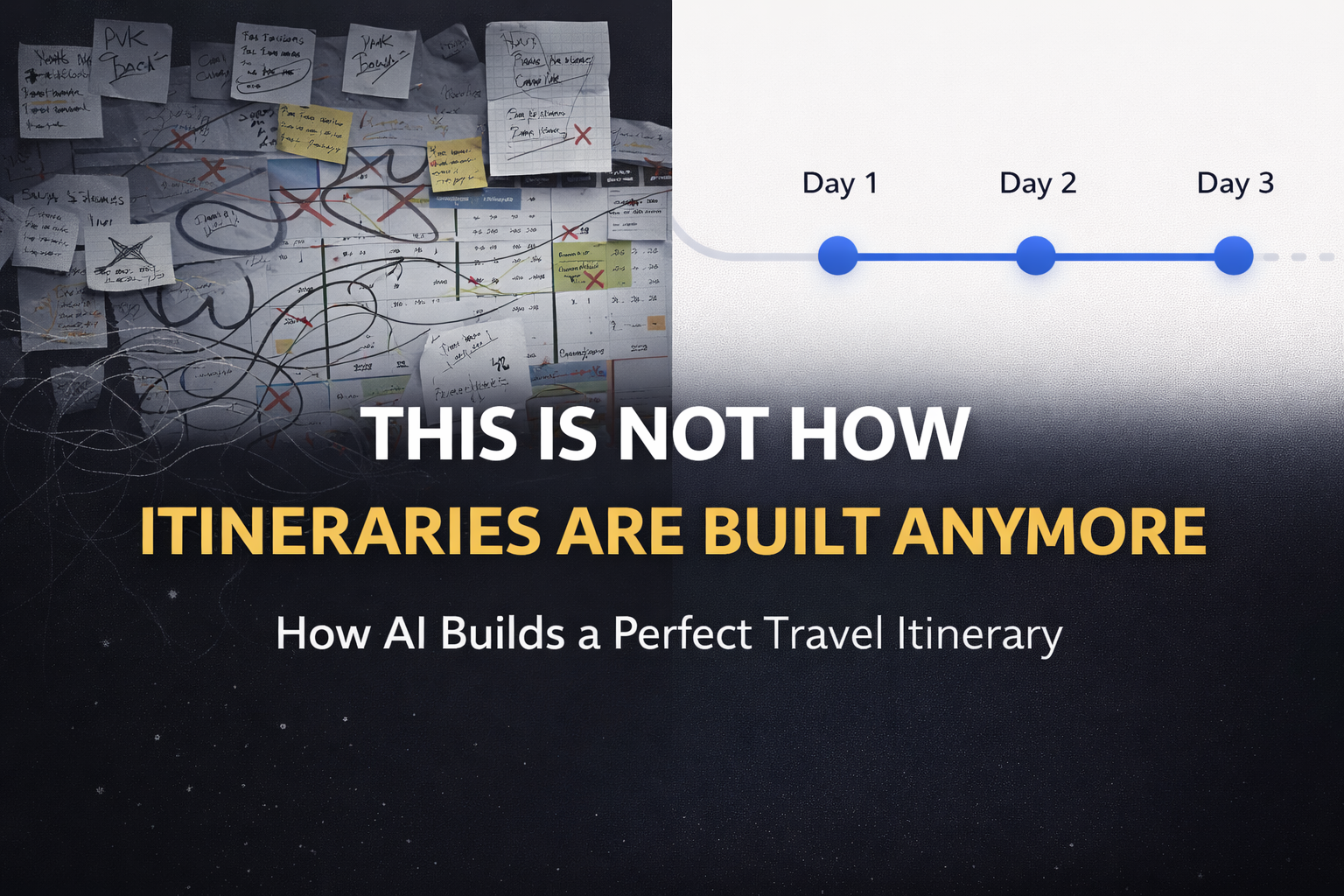
Travel itineraries used to be guesswork.
You’d copy ideas from blogs, stitch together Google Maps pins, and hope the plan worked once you landed. Sometimes it did. Often, it didn’t.
In 2026, AI has fundamentally changed how travel itineraries are built—from static schedules to dynamic, personalized plans.
This guide explains how AI actually builds a perfect travel itinerary, step by step, and why this approach consistently outperforms traditional planning.
What Does a “Perfect” Travel Itinerary Mean in 2026?
A perfect itinerary is no longer about visiting the maximum number of places.
In 2026, a great itinerary is:
- Realistic, not rushed
- Personalized to your interests
- Balanced between exploration and rest
- Flexible when plans change
AI is uniquely suited to solve this problem because it optimizes for human experience, not just locations.
Step 1: Understanding the Traveler (Not the Destination)
Traditional itineraries start with places.
AI itineraries start with you.
Modern AI planners first analyze:
- Trip duration
- Travel style (relaxed vs fast-paced)
- Interests (food, culture, adventure, nightlife)
- Group type (solo, couple, family)
This ensures two people visiting the same city don’t get the same plan.
Platforms like SearchSpot.ai use this context to avoid generic, one-size-fits-all itineraries.
Step 2: Mapping Geography and Travel Time Intelligently
One of the biggest failures of manual planning is underestimating travel time.
AI solves this by:
- Grouping attractions by proximity
- Accounting for commute time between locations
- Avoiding unnecessary backtracking
Instead of zig-zagging across a city, AI creates geographically logical days that reduce fatigue and wasted time.
Step 3: Balancing Daily Energy, Not Just Activities
Human energy is finite. Most itineraries ignore this.
AI planners model:
- Activity intensity
- Time of day suitability
- Natural breaks for food and rest
That’s why AI-built itineraries feel more “doable” than blog-based plans.
A perfect itinerary isn’t packed—it’s paced.
Step 4: Personalization at Scale
Manual personalization doesn’t scale.
AI can instantly adapt itineraries based on:
- Food preferences
- Budget sensitivity
- Weather considerations
- Travel companions
This allows platforms like SearchSpot.ai to generate thousands of unique itineraries without sacrificing quality.
Step 5: Day-by-Day Optimization
AI doesn’t plan trips as a single block.
It optimizes each day independently while keeping the overall trip balanced.
This prevents common issues like:
- Front-loading too many activities
- Exhaustion by mid-trip
- Unused free time
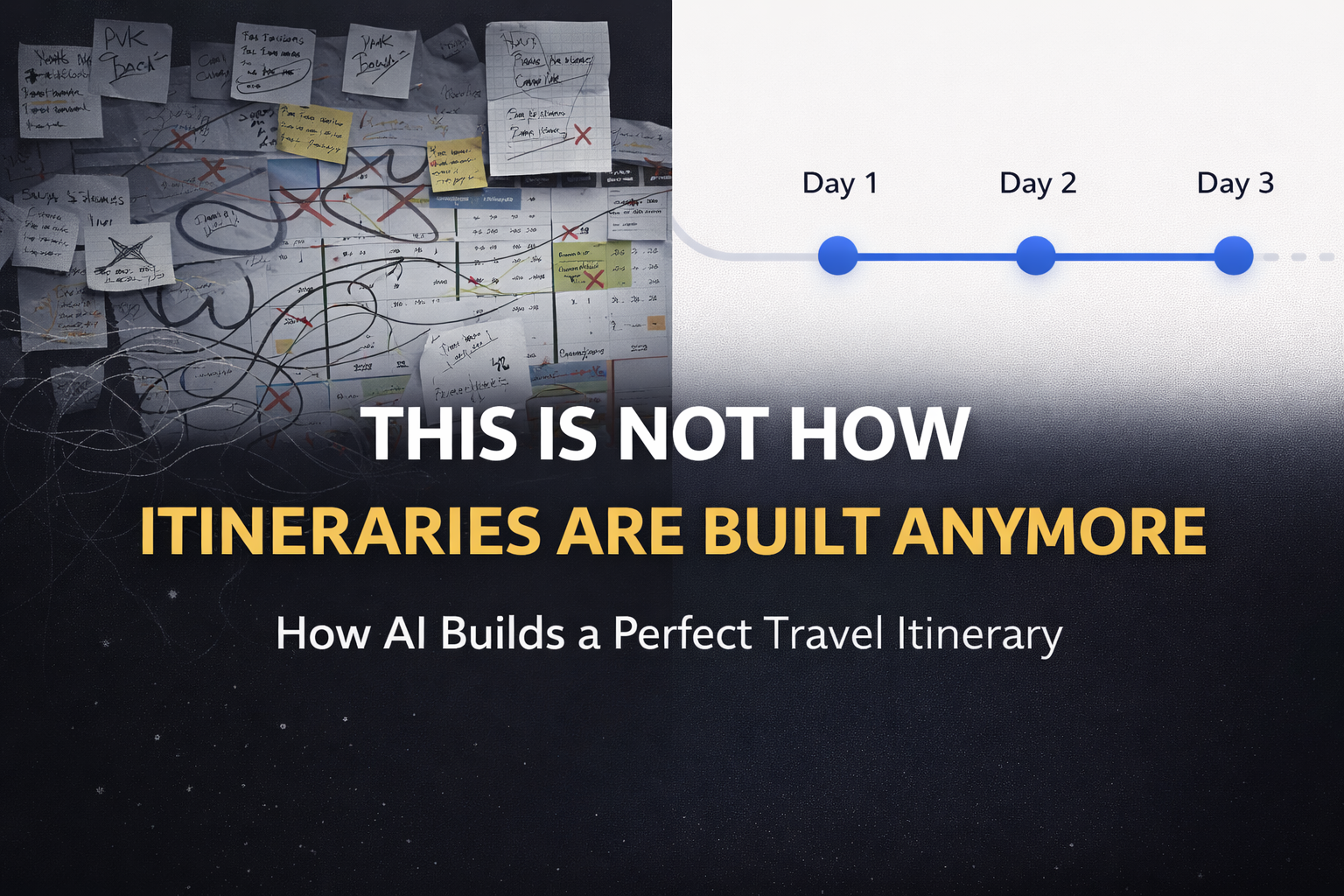
The result is a trip that feels smooth from Day 1 to Day N.
Step 6: Adaptability When Plans Change
Travel is unpredictable.
Flights get delayed. Places close. Energy levels drop.
Unlike static itineraries, AI can:
- Regenerate days instantly
- Suggest nearby alternatives
- Adjust pacing without breaking the trip
This adaptability is why AI planners dominate searches for the best itinerary planner 2026.
For a broader comparison, see this breakdown of AI trip planner vs traditional travel planning.
Why AI Itineraries Feel “Smarter”
AI itineraries feel better because they are:
- Context-aware
- Data-informed
- Continuously improving
They don’t rely on a single blogger’s experience—they learn from patterns across travelers.
Why SearchSpot.ai Builds Better Itineraries
SearchSpot.ai is designed around one principle:
Travel plans should work in real life, not just look good on paper.
It combines personalization, realistic pacing, and flexibility to create itineraries that travelers can actually follow.
Final Thoughts
In 2026, the question is no longer whether AI can plan a trip.
The question is whether you want to keep doing it manually.
AI-built itineraries are faster, more realistic, and better aligned with how people actually travel.
That’s not a trend—it’s the new standard. best of luck